


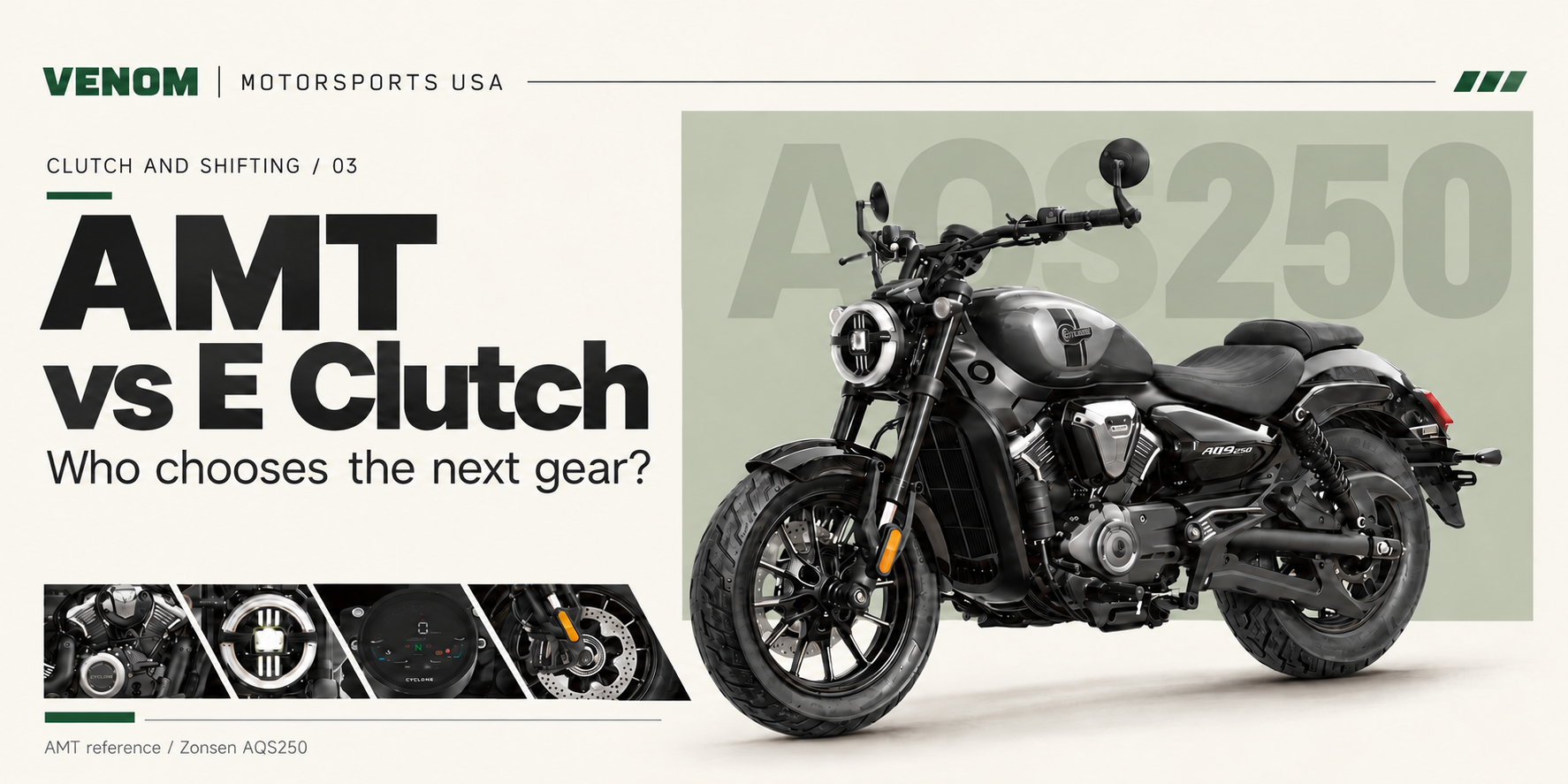
AMT vs Honda E Clutch: Does the Motorcycle Shift for You?
The key difference is gear selection. A modern AMT system with an automatic mode can choose gear changes for the rider. Honda E Clutch automates clutch operation while the rider still changes gears with the foot pedal. Both can reduce clutch lever work, but they answer different rider preferences.
If your goal is to avoid choosing gears, that difference belongs near the top of your buying checklist. If you enjoy foot shifting and mainly want help with clutch operation, the comparison starts from a different preference.
What Honda E Clutch does
Honda describes E Clutch as electronic clutch control for a manual transmission. It can manage clutch operation during starting, shifting and stopping. Gear changes still require the rider to operate the shift pedal.
Honda also describes the ability to use the clutch lever manually and to switch the system on or off. Follow the instructions for the exact motorcycle when using those functions. The essential distinction remains that clutch assistance is not automatic selection of every gear.
This gives a buyer a clear question to answer: do you want to keep requesting every shift? That is more useful than assuming any system with electronic assistance offers the same experience.
What modern AMT systems can do differently
AMT means automated manual transmission. In Yamaha’s Y AMT example, the system automates clutch and shifting operations and offers automatic gear selection alongside a rider selected mode. Yamaha explains that arrangement in its development announcement.
Other manufacturers can use different hardware and controls. An AMT description should therefore be followed by a model specific explanation, particularly for a newly introduced motorcycle. Do not assume that another manufacturer’s mode names, control layout or override behavior apply.
Compare the two rider decisions separately
| Question | AMT with automatic shifting | Honda E Clutch |
|---|---|---|
| Who chooses when to shift? | The system can choose in automatic mode. | The rider requests changes through the shift pedal. |
| Must the rider operate a clutch lever for normal assisted operation? | Consult the model’s control arrangement. | The system can manage clutch operation. |
| Can the rider still have control over gear choice? | A rider selected mode may be provided. | Gear choice remains with the rider. |
| Does the label guarantee the right motorcycle for you? | No. Compare the complete motorcycle. | No. Compare the complete motorcycle. |
The value of this comparison is precision. It separates what your left hand does from what your left foot does, rather than combining both under the phrase easier shifting.
If you want fewer control tasks
Someone who wants the motorcycle to choose gears should look specifically for automatic gear selection. Ask to see that mode demonstrated and identified in the operating manual. Clutch assistance alone will not meet that particular requirement.
Someone who wants to continue shifting by foot may prefer to keep that familiar part of the riding process. In that case, ask how clutch assistance works and how the motorcycle indicates its status. Match the system to the control experience you want.
Neither preference needs to be justified by whether you are a beginner or an experienced rider. A person can value convenience after many years on manual motorcycles. Another can enjoy learning traditional controls from the beginning.
What about a quickshifter?
Do not infer a full automatic transmission from the presence of a quickshifter. Honda’s transmission comparison treats assistance technologies as distinct choices. The practical buying question is still whether the motorcycle selects gears for you or only assists a shift that you request.
Read the operating restrictions for any fitted assistance system. Advertising phrases such as clutchless shifts do not explain every starting, stopping or maneuvering procedure. The exact model’s manual is the appropriate place to verify those details.
How to compare motorcycles without getting lost in names
Describe your preference in plain language. For example: I want automatic gear selection in normal riding. Or: I want to keep shifting with my foot but reduce clutch lever operation. A seller should be able to match either statement to an exact specification.
Then compare seat reach, motorcycle weight and the riding position. A preferred transmission does not remove the need to feel comfortable supporting and maneuvering the bike. If a control arrangement is especially important to you, verify it directly rather than relying on a general category description.
Venom’s Motorcycle Finder can help frame the wider comparison. For currently listed automatic models, read the individual transmission descriptions in the automatic motorcycle collection.
Common questions about AMT and E Clutch
Does Honda E Clutch change gears automatically?
No. Honda states that the rider operates the gear shift pedal. The electronic assistance controls the clutch.
Is Honda E Clutch the same as Honda DCT?
No. Honda identifies them as different technologies. A motorcycle advertised with E Clutch should not be described as a DCT model.
Does no clutch lever work mean no clutch inside?
No. Rider operation and internal components are separate questions. Verify the actual transmission specification.
Which one should I choose?
Start by deciding whether you want automatic gear selection or want to keep requesting shifts yourself. Then compare motorcycles that provide that operation and fit the rest of your needs.
Ask who selects the gear, then ask who operates the clutch. Those two questions make an AMT versus E Clutch comparison much clearer and help prevent buying a motorcycle that operates differently from what you expected.
For the related shift assistance question, read AMT versus a motorcycle quickshifter. It explains the difference between assisting a rider requested shift and choosing the next gear automatically.