


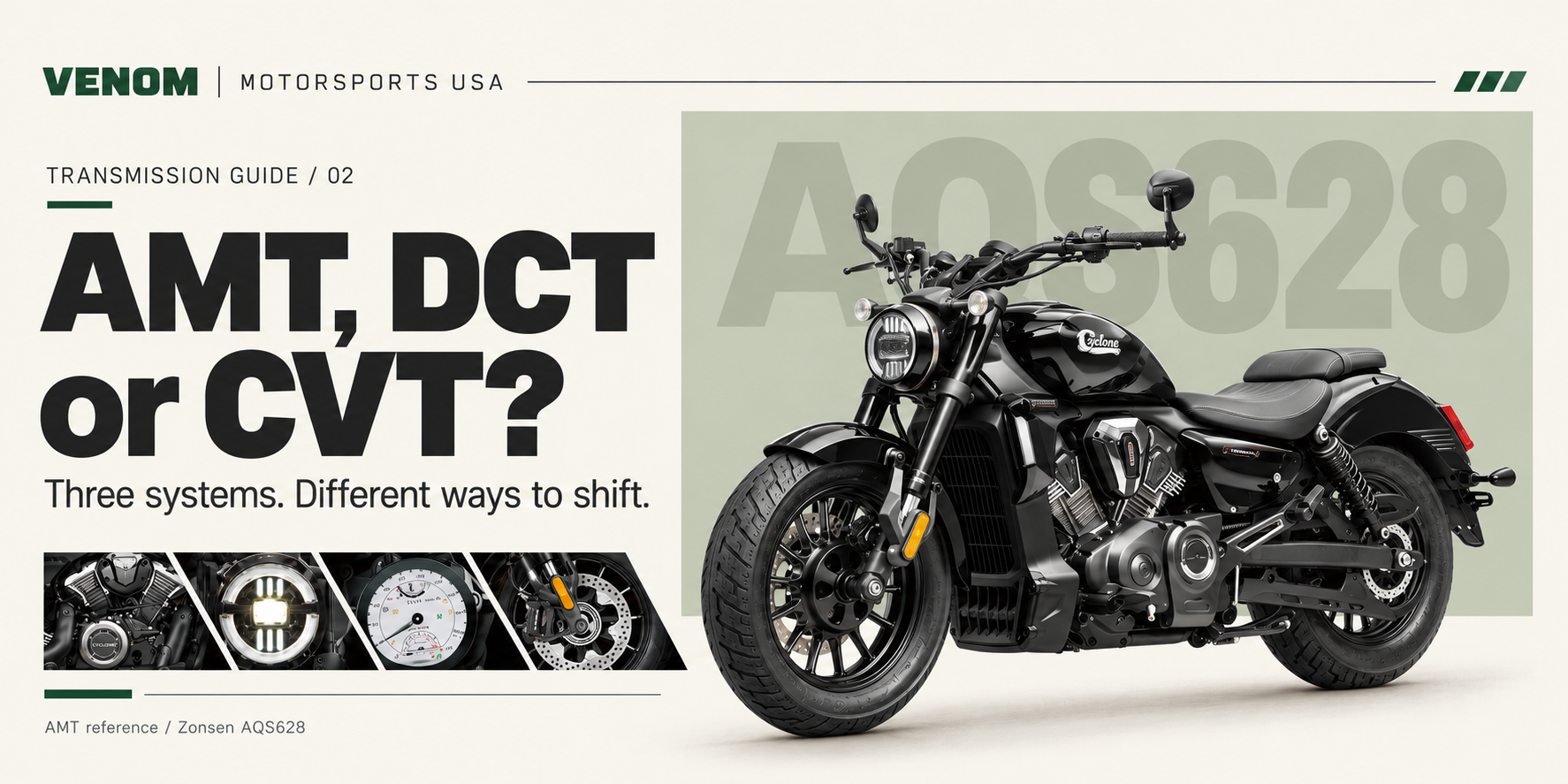
AMT vs DCT vs CVT: Motorcycle Transmission Differences
AMT uses an automated geared transmission, DCT uses two clutches with geared ratios, and CVT varies its transmission ratio continuously. All three can reduce the need for conventional clutch and shift operation, but they do not use the same design. Compare the exact motorcycle rather than treating automatic as one specification.
That approach is useful whether you are choosing a first motorcycle or replacing a manual bike. The right comparison includes the controls you want, the motorcycle that fits you and the service support behind the purchase.
AMT, DCT and CVT at a glance
| System | Basic design | What to verify |
|---|---|---|
| AMT | A geared transmission with automated operation. | Automatic shifting, rider selected modes and the controls fitted to the exact model. |
| DCT | A geared transmission using two clutches. | The available automatic and rider selected shift modes on that motorcycle. |
| CVT | A continuously variable ratio rather than a conventional sequence of fixed gears. | The specific CVT design, service schedule and intended use. |
The table describes the basic distinction. It does not establish which motorcycle accelerates faster, costs less to maintain or offers the best experience for every rider.
AMT: a geared transmission with automated operation
AMT means automated manual transmission. Modern motorcycle systems can automate clutch and shifting operations while retaining separate gear ratios. Some provide automatic shifting and a mode where the rider requests changes.
KTM’s AMT guide is one manufacturer example of this approach. Its controls and operating logic should not be transferred to another brand’s specification. Even where two motorcycles both use the AMT label, their hardware and calibration can differ.
For a buyer considering AMT, the important follow up is a practical one: ask the seller to explain the exact sequence for starting, selecting a mode and identifying the current gear. Judge the explanation against the actual manual supplied with that motorcycle.
DCT: a geared transmission with two clutches
DCT stands for dual clutch transmission. Honda’s DCT technical explanation describes separate clutches serving alternating gear groups. Its system provides automatic gear selection and a rider selected mode.
DCT therefore has actual gear ratios. It should not be called gearless simply because the rider can use automatic shifting. It also should not be used as a generic label for any motorcycle that lacks a conventional clutch control.
When comparing a DCT motorcycle with an AMT motorcycle, compare their complete specifications. Transmission architecture alone cannot tell you the final purchase price, the physical size of the bike or how well the riding position fits you.
CVT: a continuously variable ratio
CVT stands for continuously variable transmission. Yamaha’s CVT explanation describes a belt and pulley arrangement that changes the effective ratio. This differs from shifting through a normal sequence of separate gears.
That transmission belt is also a different question from the motorcycle’s final drive to the rear wheel. A listing that mentions a belt needs context. Read the transmission and final drive specifications separately, and consult Venom’s chain, belt and shaft final drive guide when comparing the latter.
A CVT model may suit a rider who prefers straightforward automatic operation. That preference still leaves other decisions open, including ergonomics, braking equipment, intended use and the quality of ownership information.
Which transmission is best for commuting?
Start with the commute rather than declaring a winner by acronym. Someone dealing with frequent stops may value reduced control workload. Someone spending more time on open roads may put greater weight on riding position, wind exposure or the complete motorcycle’s performance.
Write down the conditions you actually encounter. Include the distance, parking situation, time spent at junctions and any passenger or luggage requirements. Then compare motorcycles that meet those needs. There is little value in choosing your preferred transmission if the rest of the bike does not suit the job.
Where a demonstration is available, ask to see the controls and operating modes on the exact version you are considering. A different model from the same manufacturer may use different equipment.
Which system is easier to own?
Ask for evidence rather than relying on a universal ranking. Useful evidence includes the scheduled service items, required fluids, diagnostic arrangements, replacement parts information and written warranty terms.
An AMT label does not establish that service is cheaper than DCT. A CVT label does not establish that only one component ever needs attention. Any cost comparison should use the maintenance requirements and actual local service arrangements for the motorcycles on your shortlist.
It also helps to separate scheduled maintenance from repairs. The first is planned work described by the service schedule. The second depends on the actual fault and circumstances. Neither can be priced reliably from the transmission name alone.
Questions to ask before choosing
- What is the exact transmission type and model variant on the order?
- Which controls does the rider use, and which operations are automated?
- Does the operating manual match the motorcycle being supplied?
- What service and diagnostic support is available for this model?
- Does the complete motorcycle fit the rider and intended journey?
Common comparison questions
Is AMT the same thing as DCT?
No. AMT and DCT describe different arrangements in this comparison. Do not assume that a motorcycle has two clutches merely because its shifting can be automated.
Are all automatic motorcycles CVT?
No. Automatic operation can be offered through different designs, including geared systems. Read the individual specification.
Does an automatic motorcycle have to look like a scooter?
No. Body style does not identify the transmission inside it. Confirm both the design and the rider controls.
The best choice is a motorcycle that fits your use and comes with clear information. Browse Venom’s automatic motorcycle range for current listings, then compare each model’s verified transmission instead of assuming every automatic works the same way.